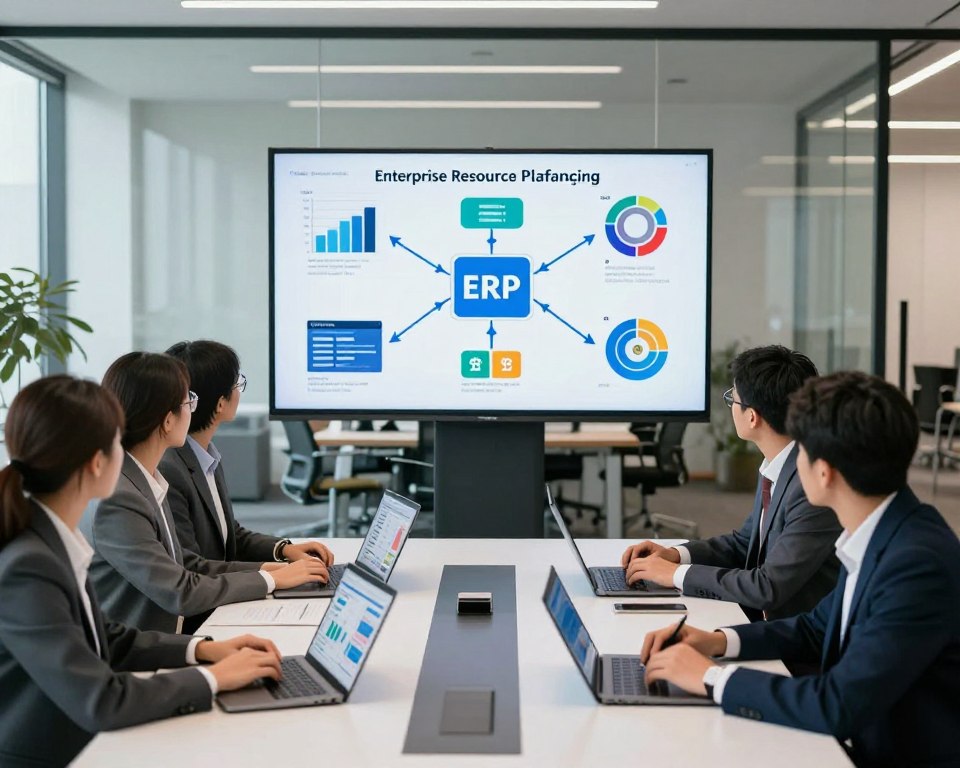
In today’s fast-paced business environment, companies are continually seeking ways to optimize their operations and improve efficiency. One crucial tool that has emerged to address this need is Enterprise Resource Planning (ERP).

Enterprise Resource Planning refers to a type of software that organizations use to manage and integrate various aspects of their business, such as financials, human resources, supply chain, and customer relationship management.
By implementing an ERP system, businesses can streamline their processes, enhance data accuracy, and make informed decisions. Understanding the erp definition is essential for organizations looking to leverage technology to drive growth and stay competitive.
The Complete ERP Meaning and Definition
To fully grasp the impact of ERP on business operations, it’s essential to understand its meaning and historical context. Enterprise Resource Planning (ERP) is a comprehensive system that integrates various business functions into a single, unified platform.
What Does ERP Stand For?
ERP stands for Enterprise Resource Planning. It’s a software system designed to manage and integrate various aspects of a business, including financials, human resources, supply chain, and customer relationship management.
Historical Evolution of Enterprise Resource Planning
The evolution of ERP systems has been a gradual process, transforming from simple inventory management tools to complex, integrated business management solutions.
From MRP to Modern ERP
The journey began with Material Requirements Planning (MRP) in the 1960s, focusing on inventory management and production planning. Over time, MRP evolved into Manufacturing Resource Planning (MRP II) in the 1980s, incorporating additional manufacturing processes. The 1990s saw the emergence of ERP, expanding beyond manufacturing to encompass various business functions.

Significant advancements in ERP include the introduction of cloud-based ERP solutions, offering greater flexibility and scalability. Another milestone is the integration of emerging technologies like AI and IoT into ERP systems, enhancing their capabilities and providing real-time insights.
Today, ERP systems play a critical role in erp implementation, enabling businesses to streamline operations, improve efficiency, and make informed decisions. As technology continues to evolve, ERP systems are likely to become even more sophisticated, further transforming the business landscape.
Core Components of Modern ERP Systems
The complexity of managing business operations has led to the development of comprehensive ERP systems that cater to diverse organizational needs. Modern ERP solutions integrate various business functions into a unified platform, enhancing operational efficiency and decision-making.

Financial Management Modules
Financial management is a critical component of ERP systems, providing tools for managing an organization’s financial operations. This includes:
Accounting and General Ledger
The accounting and general ledger module in ERP solutions enables businesses to manage their financial transactions, accounts payable, and accounts receivable efficiently. It provides a centralized platform for maintaining financial records, ensuring accuracy and compliance with accounting standards.
Financial Reporting Capabilities
ERP systems offer advanced financial reporting capabilities, allowing businesses to generate detailed financial reports, including balance sheets, income statements, and cash flow statements. These reports are crucial for financial analysis and decision-making.
Supply Chain Management Features
ERP solutions also include supply chain management features that enable businesses to manage their supply chain operations effectively. This includes procurement, inventory management, and order management, ensuring that products are delivered to customers on time and at the right cost.
Human Resources Management
The human resources management module in ERP systems provides a comprehensive platform for managing HR functions, including recruitment, talent management, payroll, and benefits administration. This helps businesses to streamline their HR processes and improve employee engagement.
Customer Relationship Management Integration
Many modern ERP solutions integrate customer relationship management (CRM) capabilities, enabling businesses to manage their customer interactions more effectively. This includes sales force automation, marketing automation, and customer service and support, helping businesses to build stronger relationships with their customers.
How ERP Systems Transform Business Operations
By adopting ERP systems, businesses can transform their operations, enhancing efficiency and productivity. This transformation is driven by several key features inherent in modern enterprise resource planning solutions.
Centralized Database Architecture
A centralized database is the cornerstone of any ERP implementation. It consolidates data from various departments into a single, unified system, eliminating data silos and enhancing data integrity. As noted by industry experts, “A centralized database architecture is crucial for ensuring data consistency and reducing errors.”
“A unified data platform enables organizations to make informed decisions, leveraging real-time data from across the enterprise.”
Cross-Departmental Process Integration
ERP systems integrate processes across different departments, ensuring seamless communication and collaboration. This integration enables businesses to streamline their operations, reducing redundancies and improving overall efficiency.
Real-Time Data Processing and Analytics
Real-time data processing is a critical feature of ERP systems, allowing businesses to respond quickly to changing market conditions. This capability is further enhanced by advanced analytics tools.
Business Intelligence Capabilities
Business intelligence capabilities within ERP systems provide insights that help businesses make strategic decisions. These capabilities include data mining, reporting, and predictive analytics.
Reporting and Dashboard Features
Customizable reporting and dashboard features enable businesses to monitor key performance indicators (KPIs) and track progress towards their goals.
Key Benefits of Implementing ERP Solutions
ERP systems offer a multitude of benefits that can significantly improve business performance and competitiveness. By integrating various business functions into a single, unified system, ERP solutions enable organizations to streamline their operations, reduce costs, and enhance decision-making capabilities.
Improved Operational Efficiency
One of the primary benefits of ERP implementation is the improvement in operational efficiency. By automating routine tasks and providing real-time data, ERP systems enable businesses to respond quickly to changing market conditions and customer needs. This leads to increased productivity and reduced operational costs.
Enhanced Data Visibility and Decision-Making
ERP solutions provide a centralized platform for data management, offering real-time insights into business performance. This enhanced data visibility enables organizations to make informed decisions, identify areas for improvement, and optimize their operations.
| Benefit | Description | Impact |
|---|---|---|
| Improved Efficiency | Automation of routine tasks | Increased Productivity |
| Enhanced Decision-Making | Real-time data insights | Better Business Outcomes |
| Cost Reduction | Streamlined processes | Reduced Operational Costs |
Cost Reduction Opportunities
ERP systems help organizations reduce costs by minimizing manual processes, reducing waste, and optimizing resource allocation. This leads to significant cost savings and improved profitability.
Scalability for Business Growth
ERP solutions are designed to scale with business growth, providing the flexibility to adapt to changing market conditions and customer needs. This scalability ensures that businesses can continue to operate efficiently as they expand.
Compliance and Risk Management
ERP systems also enable organizations to manage risk and ensure compliance with regulatory requirements. By providing a centralized platform for managing business operations, ERP solutions help reduce the risk of non-compliance and associated penalties.
Types of ERP Deployment Models
Organizations have multiple options when it comes to deploying ERP software, including on-premises, cloud-based, and hybrid models. The choice of deployment model significantly impacts the functionality, scalability, and cost of the ERP system.
On-Premises ERP Solutions
On-premises ERP solutions are installed locally on a company’s own servers. This model provides full control over data and security. The advantages include customization capabilities and enhanced security. However, it requires significant upfront investment in hardware and maintenance.
Advantages and Disadvantages
The on-premises model offers high levels of control and customization but comes with higher costs and maintenance responsibilities.
Total Cost of Ownership
The total cost of ownership for on-premises ERP includes initial investment, maintenance, and upgrade costs. Companies must consider these factors when evaluating the total cost.
Cloud-Based ERP Systems
Cloud-based ERP systems are hosted on the vendor’s servers and accessed via the internet. This model offers scalability and reduced upfront costs. SaaS ERP options provide a subscription-based model with regular updates and support.
SaaS ERP Options
SaaS ERP solutions offer flexibility and lower initial costs, making them attractive to businesses looking to reduce their IT footprint.
Security Considerations
Security is a critical consideration, with cloud providers offering advanced security measures to protect data.
Hybrid ERP Approaches
Hybrid ERP models combine elements of on-premises and cloud-based solutions, offering flexibility and the best of both worlds.
| Deployment Model | Initial Cost | Scalability | Security |
|---|---|---|---|
| On-Premises | High | Limited | High |
| Cloud-Based | Low | High | High |
| Hybrid | Medium | Medium | High |
The ERP Implementation Process
A well-planned ERP implementation is essential for maximizing the benefits of an enterprise resource planning system. The process involves several critical steps that help ensure a smooth transition and effective utilization of the ERP solution.
Planning and Requirements Analysis
The first step in ERP implementation is thorough planning and requirements analysis. This involves identifying business needs, defining project scope, and establishing clear objectives. It’s crucial to engage stakeholders from various departments to ensure that the ERP system meets the organization’s overall requirements.
System Selection and Vendor Evaluation
Selecting the right ERP system and vendor is a critical decision. Organizations should evaluate vendors based on their experience, product offerings, and support services. It’s also important to assess the total cost of ownership and the potential return on investment.
Key considerations include:
- Functionality and scalability
- Integration capabilities
- User interface and adoption rates
- Customization options
Customization and Configuration
Once the ERP system is selected, the next step is customization and configuration. This involves tailoring the system to meet specific business needs and configuring workflows, user roles, and security settings.
Data Migration Strategies
Data migration is a critical aspect of ERP implementation. Organizations need to develop strategies for transferring existing data to the new system, ensuring data integrity and minimizing downtime.
Training and Change Management
Effective training and change management are vital for user adoption and successful ERP implementation. This includes providing comprehensive training programs and communicating the benefits of the new system to end-users.
Go-Live and Post-Implementation Support
The final stage involves going live with the ERP system and providing post-implementation support. This includes monitoring system performance, addressing any issues that arise, and continuously optimizing the system to meet evolving business needs.
By following these steps and engaging experienced ERP professionals, organizations can ensure a successful ERP implementation that drives business growth and efficiency.
Common Challenges in ERP Implementation
Implementing an ERP system is a complex process that poses several challenges for organizations. As companies embark on this journey, they often encounter various obstacles that can impact the success of the project.
Budget and Timeline Management
One of the primary challenges is managing the budget and timeline effectively. ERP projects often require significant investment, and delays or cost overruns can strain resources. Effective project management is crucial to keeping the implementation on track.
Organizational Resistance to Change
Another significant challenge is overcoming organizational resistance to change. Employees may be accustomed to existing processes and may resist adopting new systems. Change management strategies are essential to facilitate a smooth transition.
Integration Complexities with Legacy Systems
Integrating ERP solutions with existing legacy systems can be complex. Ensuring seamless integration is vital to avoid data inconsistencies and process disruptions. Thorough planning and testing are necessary to address these integration complexities.
Data Quality and Migration Issues
Data quality and migration issues are also common challenges. Ensuring that data is accurate and migrated correctly to the new ERP system is critical. Data cleansing and validation processes can help mitigate these issues.
User Adoption Challenges
Finally, user adoption is a critical factor in the success of ERP implementation. Providing adequate training and support is essential to ensure that users can effectively utilize the new system. As
“The key to successful ERP implementation is not just about technology, it’s about people and processes.”
By understanding and addressing these challenges, organizations can better navigate the complexities of ERP implementation and achieve their desired outcomes.
ERP Solutions for Different Business Sizes
The diversity in ERP solutions allows businesses to choose systems that fit their specific needs based on size and complexity. This flexibility is crucial in today’s dynamic business environment, where companies of all sizes are looking to optimize their operations.
Enterprise-Level ERP Platforms
Large enterprises often require comprehensive ERP solutions that can handle complex operations and large volumes of data. SAP and Oracle are two leading vendors in this space, offering robust solutions that cater to the needs of global organizations.
SAP and Oracle Solutions
Both SAP and Oracle offer advanced ERP features, including financial management, supply chain management, and human capital management. Their solutions are highly customizable and scalable, making them suitable for large enterprises with complex requirements.
Mid-Market ERP Systems
Mid-sized businesses benefit from ERP systems that are less complex than those required by large enterprises but still offer significant functionality. Microsoft Dynamics and NetSuite are popular choices in this category.
Microsoft Dynamics and NetSuite
Microsoft Dynamics offers a range of ERP solutions that integrate well with other Microsoft products, providing a seamless experience for businesses already using Microsoft technology. NetSuite, on the other hand, is a cloud-based ERP solution that offers flexibility and scalability for mid-sized businesses.
Small Business ERP Options
Small businesses require ERP solutions that are affordable, easy to implement, and scalable. These systems should offer core functionalities such as financial management, inventory control, and customer relationship management.
Affordable and Scalable Solutions
Several ERP vendors offer solutions tailored to small businesses, focusing on ease of use and cost-effectiveness. These solutions are designed to grow with the business, providing a solid foundation for future expansion.
| Business Size | ERP Solution | Key Features |
|---|---|---|
| Large Enterprise | SAP, Oracle | Advanced financial management, complex supply chain management |
| Mid-Sized | Microsoft Dynamics, NetSuite | Integrated business processes, scalable architecture |
| Small Business | Various affordable ERP solutions | Core financial management, inventory control, CRM |
As businesses grow, their ERP needs evolve. Choosing the right ERP solution that can scale with the business is crucial for long-term success.
Industry-Specific ERP Applications
Enterprise Resource Planning (ERP) systems have become indispensable across various industries, each with its unique operational challenges and requirements. The versatility of ERP applications lies in their ability to be tailored to meet the specific needs of different sectors, thereby enhancing operational efficiency and driving business success.
Manufacturing ERP Systems
In the manufacturing sector, ERP systems play a crucial role in managing complex production processes, inventory, and supply chains. Manufacturing ERP solutions offer features such as production planning, quality control, and maintenance management, enabling manufacturers to optimize their operations and reduce costs.
Retail and Distribution Solutions
For the retail and distribution industries, ERP systems provide comprehensive solutions that encompass inventory management, order processing, and customer relationship management. Retail ERP solutions help businesses streamline their operations, improve customer satisfaction, and gain a competitive edge in the market.
Healthcare ERP Platforms
In healthcare, ERP systems are used to manage patient data, billing, and administrative tasks, improving the overall efficiency of healthcare services. Healthcare ERP platforms also facilitate compliance with regulatory requirements and enhance patient care through better data management.
Financial Services Applications
ERP systems in financial services are designed to manage financial transactions, risk management, and compliance. These systems help financial institutions to streamline their operations, reduce risks, and improve customer service.
Construction and Professional Services
For construction and professional services, ERP solutions offer project management, resource allocation, and financial management capabilities. These features enable businesses to manage complex projects more effectively, improve profitability, and enhance client satisfaction.
In conclusion, industry-specific ERP applications are revolutionizing the way businesses operate across various sectors. By providing tailored solutions that address the unique challenges of each industry, ERP systems are instrumental in driving operational efficiency, improving customer satisfaction, and fostering business growth.
Future Trends in ERP Technology
The future of ERP technology is being shaped by several key trends that promise to transform business operations.
As organizations look to stay competitive, they’re turning to innovative technologies to enhance their ERP systems. One of the most significant trends is the integration of AI and machine learning into ERP platforms, enabling advanced data analytics and predictive capabilities.
AI and Machine Learning Integration
AI and machine learning are revolutionizing ERP by automating routine tasks, improving forecasting, and enhancing decision-making processes. For instance, AI-powered chatbots can help employees navigate ERP systems more efficiently.
IoT and ERP Connectivity
The Internet of Things (IoT) is another trend impacting ERP technology. By connecting IoT devices to ERP systems, businesses can achieve real-time monitoring and control over their operations, leading to improved efficiency and reduced costs.
Mobile ERP Capabilities
With the rise of mobile devices, ERP systems are becoming more accessible on-the-go. Mobile ERP capabilities allow employees to perform tasks and access critical information from anywhere, enhancing productivity and responsiveness.
Blockchain for Supply Chain Transparency
Blockchain technology is being integrated into ERP systems to enhance supply chain transparency and security. This trend is particularly significant in industries where tracking and verifying transactions is crucial.
Low-Code/No-Code Customization
Low-code/no-code development platforms are making it easier for businesses to customize their ERP systems without extensive coding knowledge. This trend is democratizing ERP customization, allowing more users to tailor the system to their needs.
| Trend | Impact on ERP | Business Benefit |
|---|---|---|
| AI and Machine Learning | Enhanced analytics and automation | Improved decision-making and efficiency |
| IoT Connectivity | Real-time monitoring and control | Reduced costs and improved operational efficiency |
| Mobile ERP | Increased accessibility | Enhanced productivity and responsiveness |
Conclusion: Maximizing the Value of Your ERP Investment
As businesses continue to navigate the complexities of modern operations, the importance of a well-implemented ERP system cannot be overstated. By integrating various functions into a single, cohesive platform, ERP solutions offer a powerful tool for driving efficiency, improving decision-making, and enhancing overall competitiveness.
To maximize the value of ERP investment, businesses must prioritize proper implementation, comprehensive training, and ongoing support. This includes ensuring that the system is tailored to meet specific business needs, providing employees with the necessary skills to effectively utilize the system, and leveraging ongoing support to address any issues that may arise.
By doing so, organizations can unlock the full potential of their ERP implementation, driving significant ERP benefits, including improved operational efficiency, enhanced data visibility, and reduced costs. As the ERP landscape continues to evolve, businesses that have made a significant ERP investment are well-positioned to capitalize on emerging trends and technologies, such as AI and machine learning integration, IoT connectivity, and mobile ERP capabilities.
Ultimately, a successful ERP implementation is a critical component of a successful business strategy, enabling organizations to achieve their goals, drive growth, and stay ahead of the competition.
FAQ
What does ERP stand for?
ERP stands for Enterprise Resource Planning, a type of software that helps organizations manage their business operations by integrating various functions into a single system.
What are the core components of an ERP system?
The core components of an ERP system typically include financial management modules, supply chain management features, human resources management, and customer relationship management integration, among others.
How do ERP systems improve operational efficiency?
ERP systems improve operational efficiency by providing a centralized database architecture, integrating cross-departmental processes, and enabling real-time data processing and analytics, which helps organizations make informed decisions and streamline their operations.
What are the benefits of implementing an ERP solution?
The benefits of implementing an ERP solution include improved operational efficiency, enhanced data visibility and decision-making, cost reduction opportunities, scalability for business growth, and compliance and risk management.
What are the different types of ERP deployment models?
The different types of ERP deployment models include on-premises ERP solutions, cloud-based ERP systems, and hybrid ERP approaches, each with its own advantages and disadvantages.
What are the challenges associated with ERP implementation?
Common challenges associated with ERP implementation include budget and timeline management, organizational resistance to change, integration complexities with legacy systems, data quality and migration issues, and user adoption challenges.
How do I choose the right ERP system for my business?
To choose the right ERP system, consider factors such as business size, industry-specific needs, scalability requirements, and the level of customization needed, and evaluate different ERP vendors and solutions accordingly.
What is the role of AI and machine learning in ERP systems?
AI and machine learning are being increasingly integrated into ERP systems to enhance their capabilities, such as predictive analytics, automated decision-making, and intelligent process automation.
How can ERP systems support business growth and scalability?
ERP systems can support business growth and scalability by providing a flexible and adaptable platform that can be easily configured to meet changing business needs, and by enabling organizations to make data-driven decisions.