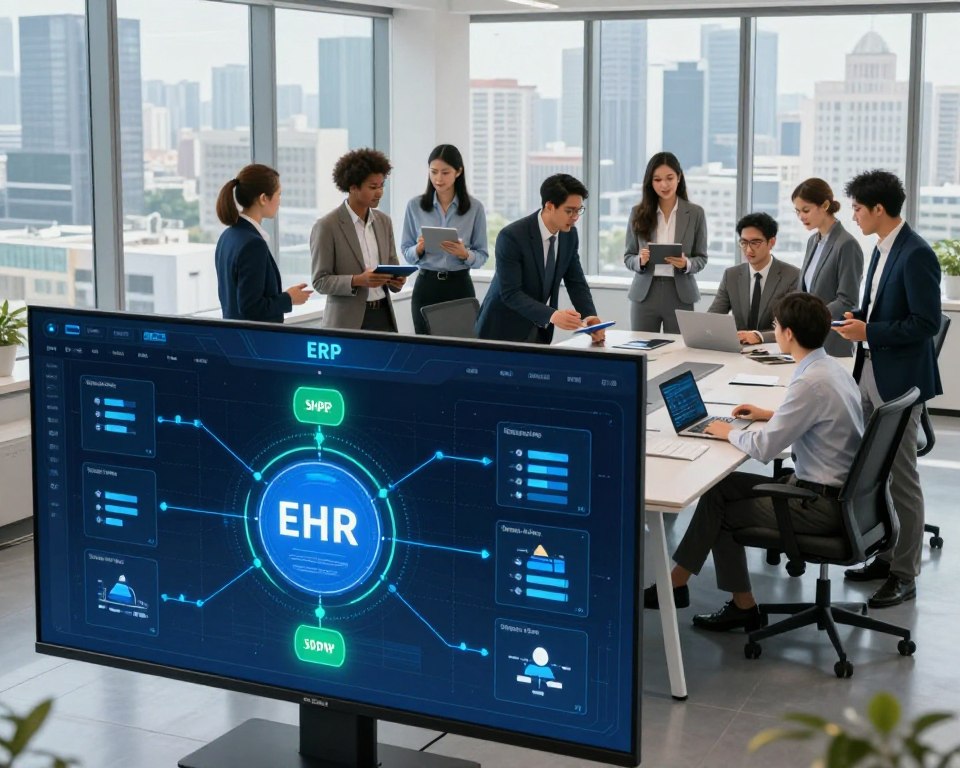
In today’s fast-paced business environment, companies need efficient systems to manage their resources effectively. Enterprise Resource Planning (ERP) has emerged as a crucial tool for organizations to streamline their operations.

ERP refers to a type of software that helps organizations manage their business processes, integrating various functions into a single system. This integration enables companies to optimize their resources, improve productivity, and make informed decisions.
By implementing an ERP system, businesses can automate tasks, reduce manual errors, and enhance collaboration across departments. As a result, organizations can achieve greater efficiency, reduce costs, and gain a competitive edge in the market.
The Complete ERP Definition and Its Business Significance
ERP has emerged as a vital tool for businesses, enabling them to manage their resources more efficiently and effectively. At its core, Enterprise Resource Planning (ERP) is a comprehensive software solution designed to integrate various business functions into a single, unified system.

This integration enables organizations to streamline their operations, improve data accuracy, and enhance decision-making capabilities. In the modern business context, ERP means having a centralized platform that connects different departments, such as finance, human resources, supply chain, and customer relationship management.
What ERP Means in Modern Business Context
In today’s business landscape, ERP systems play a crucial role in managing complex operations. They provide real-time data and insights, enabling businesses to respond quickly to changing market conditions. ERP software explanation involves understanding how these systems can automate tasks, reduce manual errors, and improve overall efficiency.
By implementing an ERP system, businesses can achieve greater visibility into their operations, allowing for more informed strategic decisions. This level of integration and insight is what makes ERP indispensable in the modern business context.
Historical Evolution of Enterprise Resource Planning
The concept of ERP has evolved significantly over the years. Initially, businesses used separate systems for different functions, such as inventory management and financial accounting. As technology advanced, these systems were integrated into a single platform, giving rise to the modern ERP systems we know today.
The historical evolution of ERP is marked by significant milestones, including the development of Material Requirements Planning (MRP) in the 1960s, followed by the introduction of Manufacturing Resource Planning (MRP II) in the 1980s. The 1990s saw the emergence of ERP as we know it today, with the integration of various business functions into a single system.
Key Components of Enterprise Resource Planning Systems
The effectiveness of an ERP system lies in its ability to integrate multiple business processes, including financial management, supply chain, and human resources. This integration enables organizations to streamline their operations, improve efficiency, and make informed decisions.
Core Modules in Modern ERP Solutions
Modern ERP solutions are built around several core modules that cater to different aspects of business operations. These modules are designed to work seamlessly together, providing a comprehensive view of the organization.
Financial Management Modules
Financial management modules are a crucial part of ERP systems, handling tasks such as accounting, budgeting, and financial reporting. They provide real-time insights into an organization’s financial health.
Supply Chain and Operations Modules
Supply chain and operations modules manage the flow of goods, services, and information from raw materials to end customers. They help optimize production planning, inventory management, and logistics.
Human Resources and CRM Components
Human resources modules within ERP systems handle employee data, payroll, benefits, and performance management. Additionally, Customer Relationship Management (CRM) components help manage customer interactions, sales, and marketing efforts.
Integration Capabilities and System Architecture
A key feature of modern ERP systems is their ability to integrate with other business applications and systems. This is achieved through robust integration capabilities and a flexible system architecture.
- Seamless data exchange between different modules and external systems
- Support for various integration protocols and APIs
- Scalable architecture to accommodate growing business needs

By integrating various business functions into a single system, ERP solutions provide a unified platform for managing operations, enhancing collaboration, and driving business growth.
How ERP Systems Transform Business Operations
By adopting ERP solutions, companies can transform their operations, enhancing productivity and reducing costs. ERP systems integrate various business functions into a single, unified platform, allowing for more efficient data flow and better resource allocation.
Streamlining Business Processes
ERP systems help organizations streamline their business processes by automating routine tasks and eliminating redundant processes. This leads to improved productivity and reduced operational costs. As noted by industry experts, “ERP systems can help companies simplify their operations and improve efficiency.”
By centralizing data and processes, ERP solutions enable businesses to standardize their operations, making it easier to manage complex tasks and improving overall organizational performance.
Data Centralization and Real-time Analytics
One of the key benefits of ERP systems is their ability to centralize data and provide real-time analytics. This allows businesses to make data-driven decisions, responding quickly to changes in the market or internal operations. With real-time insights, companies can optimize their operations, improve forecasting, and enhance their overall competitiveness.
As a result, businesses can achieve greater agility and responsiveness, driving innovation and growth in an increasingly competitive landscape.
Essential Features of Modern ERP Software
Today’s ERP solutions are more than just financial management tools; they encompass a broad spectrum of business operations. Modern ERP software is designed to be highly adaptable, catering to the diverse needs of various industries and business sizes.
Key Features of Modern ERP Systems
- Comprehensive financial management
- Advanced supply chain management
- Human capital management
- Customer relationship management
- Business intelligence and analytics
Standard ERP Functionality Across Platforms
Despite the varying needs of different businesses, there are certain standard functionalities that are common across most ERP platforms. These include:
- Financial management modules
- Inventory and supply chain management
- HR and payroll processing
- Customer service and support tools
These core functionalities provide a foundation upon which businesses can build their specific operational workflows.
Industry-Specific ERP Features and Customizations
While standard ERP functionalities provide a robust foundation, many businesses require industry-specific features to fully meet their operational needs. For instance, manufacturers may need advanced production planning and quality control modules, while retailers might require specialized inventory management and point-of-sale integration.
ERP vendors often provide industry-specific solutions that cater to these unique needs, ensuring that businesses can operate efficiently within their specific market context.
As noted by industry experts, “The right ERP solution can significantly enhance operational efficiency and provide a competitive edge.” This underscores the importance of selecting an ERP system that aligns with a business’s specific needs and industry requirements.
“The future of ERP lies in its ability to adapt to emerging technologies and evolving business needs.”
Primary Benefits of Implementing ERP Solutions
ERP implementation is a critical move for businesses aiming to enhance their operational efficiency, reduce costs, and improve decision-making capabilities. By streamlining business processes and integrating various functions into a single system, ERP solutions offer a comprehensive approach to managing enterprise resources.
Operational Efficiency Improvements
The implementation of an ERP system significantly improves operational efficiency by automating routine tasks, reducing manual errors, and enhancing workflow. This leads to increased productivity and better resource allocation, allowing businesses to achieve more with less.
Cost Reduction and ROI Potential
ERP solutions are designed to reduce operational costs by minimizing waste, optimizing resource utilization, and improving supply chain management. By achieving these efficiencies, businesses can expect a significant return on investment (ROI). A well-planned ERP implementation process is crucial for realizing these cost savings.
Enhanced Decision-Making Through Business Intelligence
One of the key benefits of ERP systems is their ability to provide real-time data and business intelligence. This enables organizations to make informed decisions based on accurate, up-to-date information. The integration of business intelligence tools within ERP systems supports strategic planning and forecasting.
| Benefit | Description | Impact |
|---|---|---|
| Operational Efficiency | Streamlined processes and reduced manual errors | Increased productivity |
| Cost Reduction | Minimized waste and optimized resource use | Significant ROI |
| Decision-Making | Real-time data and business intelligence | Informed strategic decisions |
Types of ERP Systems: Deployment Options Explained
Understanding the different types of ERP deployment options is crucial for businesses looking to implement these systems. The choice of deployment can significantly impact a company’s operational efficiency, scalability, and cost structure.
Traditional On-Premise ERP Systems
Traditional on-premise ERP systems are installed locally on a company’s own servers. This model provides full control over data security and system customization. However, it requires significant upfront investment in hardware and maintenance.
Cloud ERP and SaaS Models
Cloud ERP and SaaS (Software as a Service) models offer a more flexible and cost-effective solution. These systems are hosted on the vendor’s servers and accessed via the internet. Scalability and reduced IT burden are key advantages of cloud ERP.
Hybrid ERP Solutions
Hybrid ERP solutions combine elements of both on-premise and cloud models. This approach allows businesses to leverage the benefits of both worlds, such as keeping sensitive data on-premise while using cloud services for other functions.
| Deployment Model | Key Features | Advantages |
|---|---|---|
| Traditional On-Premise | Local installation, full control | High security, customization |
| Cloud ERP/SaaS | Hosted on vendor servers, internet access | Scalability, cost-effective |
| Hybrid ERP | Combination of on-premise and cloud | Flexibility, balanced control |
Each ERP deployment model has its strengths and is suited to different business needs. Careful consideration of these options is essential for a successful ERP implementation.
The ERP Implementation Process Explained
Successfully deploying an ERP solution demands a thorough understanding of the implementation process. This complex process involves several critical steps that organizations must undertake to ensure the successful integration of the ERP system into their operations.
Planning and Requirements Gathering
The first step in the ERP implementation process is planning and requirements gathering. This involves identifying the organization’s needs, defining the project scope, and establishing clear goals and objectives. It is crucial to engage stakeholders from various departments to ensure that the ERP system meets the organization’s overall requirements.
System Selection and Customization
Once the requirements are gathered, the next step is to select an appropriate ERP system and customize it according to the organization’s needs. This involves evaluating different ERP solutions, comparing their features, and choosing the one that best aligns with the organization’s goals. Customization is also critical to ensure that the system meets specific business requirements.
Data Migration and Testing
Data migration is a critical phase where data from the old system is transferred to the new ERP system. This process requires careful planning to ensure data integrity and accuracy. Following data migration, thorough testing is conducted to identify and resolve any issues, ensuring that the system functions as expected.
Training, Go-Live Strategies, and Post-Implementation Support
The final stages of ERP implementation involve training end-users, developing go-live strategies, and providing post-implementation support. Comprehensive training is essential to ensure that users can effectively utilize the new system. Go-live strategies are planned to minimize disruptions, and post-implementation support is provided to address any issues that arise after the system goes live.
| Implementation Phase | Key Activities | Responsible Parties |
|---|---|---|
| Planning and Requirements Gathering | Identify needs, define project scope, establish goals | Project Managers, Stakeholders |
| System Selection and Customization | Evaluate ERP solutions, customize the system | ERP Consultants, IT Team |
| Data Migration and Testing | Migrate data, conduct thorough testing | IT Team, ERP Consultants |
| Training and Go-Live | Train end-users, plan go-live strategy | Training Team, Project Managers |
Common Challenges in ERP Adoption and How to Overcome Them
ERP implementation challenges can be significant, but understanding these obstacles is key to overcoming them. As organizations embark on the journey to implement an Enterprise Resource Planning system, they often encounter various hurdles that can impact the success of the project.
Technical Implementation Hurdles
One of the primary challenges in ERP adoption is technical implementation. This includes issues such as system integration, data migration, and compatibility with existing infrastructure. To overcome these hurdles, organizations should invest in thorough planning and testing, ensuring that the ERP system aligns with their business processes and technical requirements.
Organizational Change Management
ERP implementation also requires significant organizational change. Employees must adapt to new processes and systems, which can be met with resistance. Effective change management strategies, including training and communication, are crucial to ensure a smooth transition and maximize user adoption.
Budget and Timeline Considerations
Staying within budget and meeting implementation timelines are additional challenges. To mitigate these risks, organizations should develop a detailed project plan, allocate sufficient resources, and continuously monitor progress. This proactive approach helps in identifying and addressing potential issues before they escalate.
ERP for Different Business Sizes: From SMBs to Enterprises
As businesses grow, their ERP needs change, requiring scalable solutions that can adapt to their evolving requirements. ERP software explanation is crucial for understanding how these systems can be tailored to different business sizes.
The needs of small and medium businesses (SMBs) differ significantly from those of large enterprises. SMBs typically require ERP solutions that are cost-effective, easy to implement, and scalable.
Small and Medium Business ERP Solutions
For SMBs, ERP solutions are designed to streamline operations, improve efficiency, and provide real-time data insights. These systems are often cloud-based, reducing the need for significant upfront investments in hardware and infrastructure. Cloud ERP solutions offer flexibility and scalability, allowing SMBs to adapt quickly to changing market conditions.
Key features of SMB ERP solutions include:
- Simplified implementation processes
- User-friendly interfaces
- Scalability to support business growth
- Integration with other business applications
Enterprise-Grade ERP Systems and Global Deployments
Enterprise-grade ERP systems are designed for large, complex organizations with global operations. These systems require robust functionality, advanced customization options, and the ability to integrate with existing legacy systems.
Enterprise ERP solutions often involve:
- Comprehensive functionality across multiple business areas
- Advanced analytics and business intelligence capabilities
- Global deployment capabilities, including multi-language and currency support
- High-level security and compliance features
By understanding the specific needs of different business sizes, organizations can select the most appropriate ERP solution to drive their operational efficiency and strategic growth.
Industry-Specific ERP Applications and Use Cases
Enterprise Resource Planning (ERP) systems have become indispensable across various industries, offering tailored solutions to meet specific business needs. The adaptability of ERP applications is a key factor in their widespread adoption, enabling businesses to streamline their operations and improve efficiency.
Manufacturing and Distribution
In the manufacturing sector, ERP systems are used to manage production planning, inventory control, and supply chain logistics. For instance, manufacturers can utilize ERP to track raw material supplies, monitor production workflows, and forecast demand. Distribution companies also benefit from ERP by optimizing their logistics and ensuring timely delivery of products.
Retail and E-commerce
Retailers and e-commerce businesses leverage ERP systems to manage their sales channels, inventory, and customer data. ERP solutions help these businesses to synchronize their online and offline sales data, providing a unified view of customer interactions and preferences. This enables retailers to offer personalized customer experiences and improve sales.
Healthcare and Pharmaceuticals
In the healthcare and pharmaceutical industries, ERP systems are critical for managing complex operations, including patient data management, inventory control of medical supplies, and compliance with regulatory requirements. ERP solutions help healthcare providers to streamline their administrative tasks, improve patient care, and reduce operational costs.
Professional Services and Other Industries
Professional service firms, such as consulting and law firms, use ERP systems to manage their projects, resources, and client engagements. ERP solutions enable these firms to track project progress, manage client billing, and analyze profitability. Other industries, including finance and education, also benefit from ERP by automating their back-office functions and enhancing operational efficiency.
| Industry | ERP Applications | Benefits |
|---|---|---|
| Manufacturing | Production planning, inventory control | Improved efficiency, reduced costs |
| Retail/E-commerce | Sales channel management, inventory synchronization | Enhanced customer experience, increased sales |
| Healthcare/Pharmaceuticals | Patient data management, regulatory compliance | Streamlined operations, improved patient care |
| Professional Services | Project management, client engagement tracking | Better project outcomes, improved profitability |
As demonstrated, ERP systems offer a wide range of industry-specific applications, driving business success across various sectors. By understanding the unique needs of different industries, ERP solutions can be tailored to provide maximum value.
Conclusion: The Future of Enterprise Resource Planning
The concept of Enterprise Resource Planning (ERP) has evolved significantly over the years, transforming from a simple definition to a comprehensive business management solution. As we’ve explored in this article, ERP definition encompasses a broad range of functionalities that enable organizations to streamline their operations, improve efficiency, and make informed decisions.
As businesses continue to navigate the complexities of a rapidly changing global landscape, the role of ERP systems will become increasingly critical. The future of Enterprise Resource Planning lies in its ability to adapt to emerging technologies, such as artificial intelligence, cloud computing, and the Internet of Things (IoT). By leveraging these advancements, ERP solutions will continue to provide businesses with the agility, visibility, and insights needed to stay competitive.
The enterprise resource planning definition will continue to evolve, incorporating new features and capabilities that address the changing needs of businesses. As organizations look to the future, it’s clear that ERP will remain a vital component of their technology infrastructure, enabling them to drive growth, improve productivity, and achieve their strategic objectives.
FAQ
What is Enterprise Resource Planning (ERP)?
Enterprise Resource Planning (ERP) is a type of software that organizations use to manage and integrate various aspects of their operations, such as financials, human resources, supply chain, and customer relationships.
What are the key benefits of implementing an ERP system?
The primary benefits of implementing an ERP system include improved operational efficiency, cost reduction, enhanced decision-making capabilities, and better resource allocation.
What are the different deployment options for ERP systems?
ERP systems can be deployed on-premise, in the cloud, or as a hybrid model, each offering different advantages and suitability for various business needs.
How do ERP systems support business intelligence and analytics?
ERP systems provide real-time data and analytics, enabling organizations to make informed decisions, identify trends, and optimize their operations.
What are the common challenges faced during ERP implementation?
Common challenges include technical implementation hurdles, organizational change management, and budget and timeline considerations, which can be mitigated with proper planning and support.
How do ERP systems cater to different business sizes?
ERP systems are designed to support various business sizes, from small and medium businesses to large enterprises, with tailored solutions and scalability to meet specific needs.
What is the role of ERP in industry-specific applications?
ERP systems are adapted to various industries, including manufacturing, retail, healthcare, and professional services, providing industry-specific functionality and use cases.
What is the future of Enterprise Resource Planning?
The future of ERP involves continued evolution, with advancements in technology, such as artificial intelligence and cloud computing, leading to more sophisticated and integrated ERP solutions.
How does ERP contribute to operational efficiency improvements?
ERP systems streamline business processes, automate tasks, and provide real-time visibility, leading to improved productivity and reduced operational costs.
What is the significance of ERP functionality and features?
ERP functionality and features, such as financial management, supply chain management, and human resources, are crucial for supporting various business operations and enabling organizations to achieve their goals.