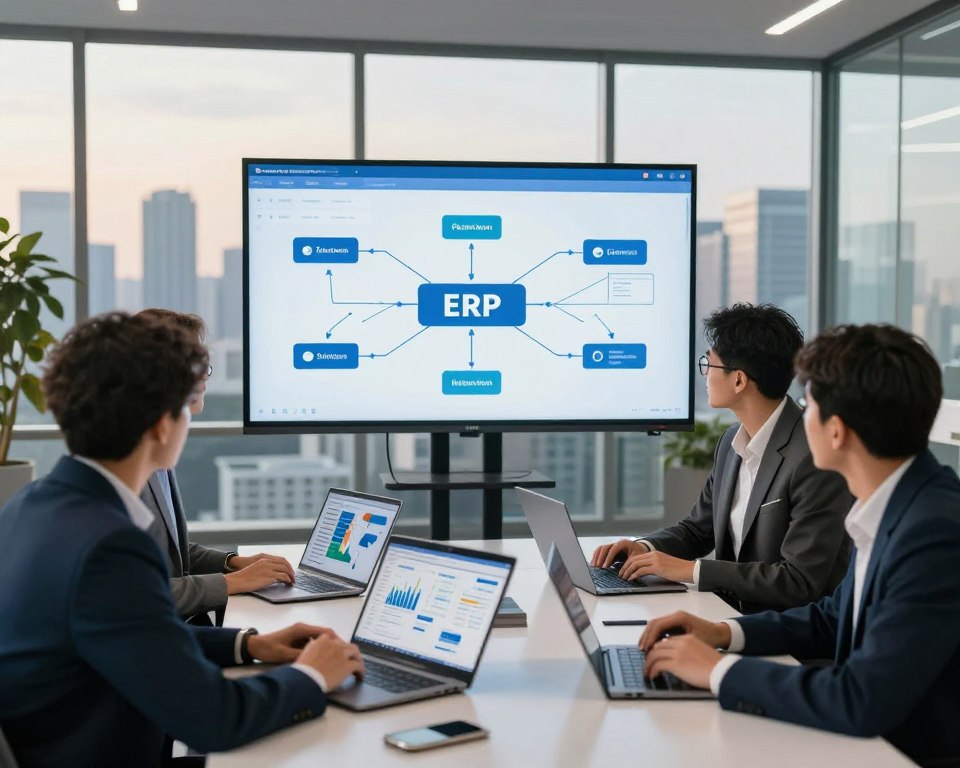
In today’s competitive business landscape, optimizing operations is crucial for growth and success. One effective way to achieve this is through professional ERP consulting, which helps businesses streamline their processes and improve efficiency.

By leveraging the expertise of ERP consultants, companies can identify areas for improvement and implement tailored solutions that drive productivity and reduce costs. This not only enhances operational performance but also enables businesses to make informed decisions based on real-time data.
With the right ERP consulting partner, businesses can navigate the complexities of ERP implementation and maximize their return on investment. This sets the stage for sustained growth and competitiveness in an ever-evolving market.
Understanding ERP Systems and Their Business Impact
The implementation of ERP software solutions has become a strategic imperative for businesses seeking to enhance their efficiency and competitiveness. As organizations navigate the complexities of modern business operations, ERP systems have emerged as a vital tool for managing resources effectively.
The Evolution of Enterprise Resource Planning
ERP systems have undergone significant transformations since their inception. Initially focused on inventory control and supply chain management, modern ERP solutions now encompass a broad range of functionalities, including financial management, human resources, and customer relationship management. This evolution has enabled businesses to integrate various aspects of their operations, facilitating a more holistic approach to management.
How Modern ERP Systems Transform Business Operations
Modern ERP systems have the capability to transform business operations by providing real-time data, automating processes, and enhancing decision-making. By leveraging advanced technologies such as AI and machine learning, ERP systems can offer predictive analytics, helping businesses to anticipate and respond to changes in the market. This enables organizations to become more agile and responsive to customer needs.
The Growing Need for Specialized ERP Expertise
As ERP systems become increasingly complex, the demand for specialized ERP expertise has grown. Businesses require professionals who can not only implement and manage ERP systems but also optimize their use to achieve strategic objectives. This has led to a rise in ERP consulting services, with experts providing guidance on system selection, implementation, and ongoing management.
| ERP System Component | Functionality | Business Benefit |
|---|---|---|
| Financial Management | Real-time financial reporting and analysis | Enhanced financial visibility and decision-making |
| Human Resources | Streamlined HR processes and talent management | Improved employee engagement and retention |
| Supply Chain Management | Optimized supply chain operations and logistics | Reduced costs and improved delivery times |

The Strategic Benefits of Professional ERP Consulting
The strategic benefits of ERP consulting are multifaceted, offering businesses a pathway to streamlined operations, enhanced data insights, and reduced costs. By leveraging the expertise of professional ERP consultants, organizations can unlock the full potential of their ERP systems, driving business growth and competitiveness.

Streamlining Business Operations and Workflows
Professional ERP consulting helps businesses streamline their operations by optimizing workflows and automating processes. This leads to increased efficiency and reduced manual errors, enabling organizations to focus on core business activities.
Enhancing Data Integration and Business Intelligence
ERP consulting services enable businesses to integrate their data across various departments, providing a unified view of their operations. This enhances business intelligence, allowing organizations to make informed decisions based on real-time data.
Cost Reduction and Resource Optimization
By implementing efficient ERP systems, businesses can reduce costs associated with manual processes and optimize resource allocation. This results in significant cost savings and improved resource utilization.
Gaining Competitive Advantage Through Technology
Professional ERP consulting empowers businesses to leverage technology to gain a competitive edge. By adopting best practices and staying ahead of the technological curve, organizations can outperform their competitors and achieve sustainable growth.
In conclusion, the strategic benefits of professional ERP consulting are clear. By streamlining operations, enhancing data integration, reducing costs, and gaining a competitive advantage, businesses can achieve long-term success in today’s competitive landscape.
Essential ERP Consulting Services for Business Growth
ERP consulting services play a crucial role in helping businesses optimize their processes and achieve sustainable growth. By leveraging the expertise of ERP consultants, organizations can streamline their operations, improve efficiency, and make informed decisions.
ERP Strategy Development and Roadmapping
Developing a comprehensive ERP strategy is the foundation of a successful implementation. ERP consultants work closely with businesses to understand their goals, assess their current systems, and create a tailored roadmap for ERP adoption. This strategic planning ensures that the ERP system aligns with the organization’s objectives and drives long-term value.
System Selection and Vendor Evaluation
Selecting the right ERP system is critical to meeting the specific needs of a business. ERP consultants provide expert guidance in evaluating different ERP solutions, assessing vendor capabilities, and comparing features to determine the best fit. This process involves thorough analysis and due diligence to ensure that the chosen system meets the organization’s requirements and budget.
Implementation Planning and Project Management
Effective implementation planning and project management are vital to the success of an ERP project. ERP consultants develop detailed project plans, coordinate with stakeholders, and oversee the implementation process to ensure it is completed on time, within budget, and to the required quality standards.
Post-Implementation Support and Continuous Improvement
After the ERP system is implemented, ongoing support and continuous improvement are essential to maximize its benefits. ERP consultants provide training, support, and regular system audits to ensure the system continues to meet the evolving needs of the business. This includes identifying opportunities for further optimization and implementing upgrades as necessary.
| ERP Consulting Service | Description | Benefits |
|---|---|---|
| ERP Strategy Development | Creating a tailored ERP strategy and roadmap | Aligns ERP with business goals, ensures long-term value |
| System Selection and Vendor Evaluation | Evaluating ERP solutions and vendors | Ensures the best fit for the organization, meets budget and requirements |
| Implementation Planning and Project Management | Overseeing ERP implementation | Ensures timely, budget-friendly, and quality implementation |
| Post-Implementation Support | Providing ongoing support and improvement | Maximizes ERP benefits, adapts to evolving business needs |
The ERP Implementation Process: A Comprehensive Guide
The ERP implementation process is a comprehensive and intricate journey that businesses must undertake to achieve their operational goals. This complex process involves several stages, from initial assessment to final deployment, each requiring careful planning and execution.
Assessment and Planning Phase
The first stage in the ERP implementation process is the assessment and planning phase. This critical phase lays the foundation for the entire project.
Business Requirements Analysis
A thorough business requirements analysis is essential to identify the organization’s needs and define the project’s scope. This involves gathering input from various stakeholders to understand the business processes that need to be supported or improved by the ERP system.
Current System Evaluation
An evaluation of the current system is also crucial during this phase. This assessment helps identify existing pain points, inefficiencies, and areas for improvement, providing a clear picture of what the new ERP system needs to address.
Design and Configuration Stage
Following the assessment and planning phase, the next step is the design and configuration stage. During this stage, the ERP system is configured to meet the organization’s specific needs, including setting up workflows, user roles, and data structures.
Testing and Validation Procedures
Testing and validation are critical components of the ERP implementation process. This stage involves thorough testing of the configured system to ensure it meets the business requirements and functions as expected. Various testing procedures, including unit testing, integration testing, and user acceptance testing (UAT), are conducted to validate the system’s performance.
Deployment and Go-Live Strategies
The final stage involves deployment and go-live strategies. A well-planned deployment strategy ensures a smooth transition from the old system to the new ERP system. This includes developing a go-live plan, providing necessary training to end-users, and having support in place to address any issues that may arise during the initial period.
By following these stages and best practices, businesses can ensure a successful ERP implementation that meets their operational needs and drives long-term value.
Selecting the Right ERP Consulting Partner
Choosing the right ERP consulting partner is a critical decision that can significantly impact the success of your ERP implementation. This selection process involves evaluating several key factors to ensure the partner aligns with your business needs and objectives.
Essential Qualifications and Technical Expertise
A competent ERP consulting partner should possess the necessary technical expertise and qualifications. This includes certifications from ERP vendors and a team of experienced consultants who have a deep understanding of ERP systems.
Industry-Specific Experience and Knowledge
Industry-specific experience is crucial for an ERP consulting partner. They should have a proven track record in your industry, understanding the unique challenges and requirements that your business faces.
Evaluating Consultant Track Records and Case Studies
Reviewing case studies and track records is essential to gauge the consulting partner’s success rate and ability to deliver results. Look for concrete examples of their work and the benefits they’ve brought to other clients.
Communication and Cultural Fit Considerations
Effective communication and cultural fit are vital for a successful partnership. Ensure that the consulting partner can communicate clearly and aligns with your organization’s culture and values.
| Evaluation Criteria | Description | Importance Level |
|---|---|---|
| Technical Expertise | Certifications and experience in ERP systems | High |
| Industry Experience | Knowledge and experience in your specific industry | High |
| Track Record | Success stories and case studies | Medium |
| Cultural Fit | Alignment with your organization’s culture | Medium |
ERP System Integration: Connecting Your Business Ecosystem
Effective ERP system integration is crucial for creating a seamless and efficient business ecosystem. As businesses grow and evolve, their ERP systems must be able to integrate with various other systems and applications to support expanded operations.
One of the key challenges in ERP system integration is integrating with legacy systems. Many organizations have existing legacy systems that contain critical business data. Integrating these systems with modern ERP solutions requires careful planning and execution to ensure data consistency and system compatibility.
Integration with Legacy Systems
Legacy system integration involves connecting older systems with the new ERP software solutions. This process requires a thorough understanding of both the legacy systems and the ERP system to ensure seamless data transfer and system interoperability.
Cloud vs. On-Premises Integration Approaches
The choice between cloud and on-premises integration approaches depends on the organization’s specific needs and infrastructure. Cloud-based ERP systems offer greater flexibility and scalability, while on-premises solutions provide more control over data security.
API and Middleware Solutions
API and middleware solutions play a crucial role in facilitating ERP system integration. APIs enable different applications to communicate with each other, while middleware solutions provide a layer of abstraction to simplify integration processes.
Data Synchronization and Management Strategies
Effective data synchronization and management are critical for ensuring that ERP systems remain up-to-date and accurate. This involves implementing robust data governance policies and using data synchronization tools to maintain data consistency across different systems.
| Integration Aspect | Cloud-Based ERP | On-Premises ERP |
|---|---|---|
| Scalability | High | Limited |
| Security Control | Limited | High |
| Flexibility | High | Limited |
Overcoming Common Challenges in ERP Implementation
The road to successful ERP implementation is paved with challenges that require careful navigation. Effective ERP consulting services can make a significant difference in overcoming these hurdles.
One of the primary challenges is managing organizational change and resistance. Employees often struggle to adapt to new systems, leading to decreased productivity. To mitigate this, it’s essential to implement comprehensive change management strategies that include training and clear communication about the benefits of the ERP system.
Managing Organizational Change and Resistance
To manage change effectively, organizations should focus on engaging employees early in the process. This involves providing robust training programs and ensuring that staff understand how the ERP system will improve their work processes.
Addressing Data Migration and Quality Issues
Data migration is another critical challenge. Ensuring data quality and accuracy during the transfer process is vital. Organizations should adopt a systematic approach to data migration, including data cleansing and validation, to prevent future issues.
Balancing Customization and Standard Functionality
Finding the right balance between customization and standard functionality is crucial. While customization can tailor the ERP system to specific business needs, excessive customization can lead to increased costs and complexity. It’s essential to weigh the benefits against the potential drawbacks.
Controlling Scope Creep and Budget Management
Scope creep and budget overruns are common pitfalls in ERP implementation. Effective ERP project management involves setting clear project boundaries, monitoring progress closely, and managing stakeholder expectations to keep the project on track.
| Challenge | Solution | Benefit |
|---|---|---|
| Organizational Change | Change Management Strategies | Increased Employee Adoption |
| Data Migration Issues | Systematic Data Migration Approach | Improved Data Accuracy |
| Customization vs. Standard Functionality | Balanced Approach to Customization | Cost and Complexity Management |
| Scope Creep and Budget Overruns | Effective Project Management | Project Timeliness and Budget Adherence |
ERP Consulting Best Practices for Successful Outcomes
In the realm of ERP consulting, adopting best practices is not just beneficial, it’s essential for achieving desired business outcomes. Successful ERP implementation requires a multifaceted approach that includes effective project governance, change management, comprehensive training, and continuous improvement.
Establishing Clear Project Governance
Clear project governance is the foundation of a successful ERP implementation. It involves defining roles, responsibilities, and processes to ensure that the project stays on track. An ERP solutions provider can help establish a governance structure that aligns with the organization’s objectives.
Effective Change Management Strategies
Change management is critical in ERP implementation. It involves preparing the organization for the changes brought about by the new system. Effective strategies include communication plans, training programs, and support structures.
Comprehensive User Training Programs
User training is vital for the successful adoption of an ERP system. Comprehensive training programs ensure that users are equipped to maximize the system’s capabilities. Training should be tailored to different user groups and include hands-on practice.
Documentation and Knowledge Transfer
Proper documentation and knowledge transfer are essential for the long-term success of an ERP system. This includes user manuals, technical documentation, and knowledge transfer to internal teams.
Continuous Improvement Methodologies
Continuous improvement is key to maximizing the ROI of an ERP system. This involves regular assessment of the system’s performance and identifying areas for improvement. Methodologies such as Lean and Six Sigma can be applied.
| Best Practice | Description | Benefit |
|---|---|---|
| Clear Project Governance | Defines roles and responsibilities | Ensures project stays on track |
| Effective Change Management | Prepares organization for change | Reduces resistance to new system |
| Comprehensive User Training | Equips users to maximize system capabilities | Increases user adoption and satisfaction |
By adopting these best practices, organizations can ensure successful ERP implementation and maximize the benefits of their ERP system.
Measuring ROI and Business Value from ERP Consulting
The success of ERP implementation hinges on the ability to measure and realize its business value. As organizations invest significant resources in ERP systems, understanding the return on investment (ROI) is crucial for justifying these expenditures and ensuring future business decisions are data-driven.
Key Performance Indicators for ERP Success
To effectively measure the ROI of ERP consulting, businesses must identify and track relevant key performance indicators (KPIs). These metrics provide insights into the system’s impact on business operations and financial performance.
Operational Efficiency Metrics
Operational efficiency metrics assess how ERP implementation has improved business processes. Examples include:
- Reduced cycle times for order fulfillment and production.
- Increased productivity through automation and streamlined workflows.
- Enhanced supply chain management through better visibility and coordination.
Financial Performance Indicators
Financial performance indicators evaluate the economic benefits of ERP implementation. These may include:
- Cost savings from reduced manual processes and improved resource allocation.
- Improved cash flow management through enhanced forecasting and financial reporting.
- Increased revenue through better demand planning and customer service.
Short-term vs. Long-term Value Assessment
When assessing the value of ERP consulting, it’s essential to differentiate between short-term and long-term benefits. While initial improvements might be seen in areas like cost reduction, long-term value often comes from strategic advantages such as improved decision-making and enhanced business agility.
Continuous Improvement and Value Realization
ERP systems are not static; they require ongoing optimization to deliver maximum value. Continuous improvement strategies, such as regular system audits and user training, help ensure that the ERP system remains aligned with evolving business needs and continues to provide a strong ROI.
By focusing on these aspects, businesses can effectively measure the ROI of their ERP consulting investments and make informed decisions about future technology initiatives.
Conclusion: Leveraging ERP Consulting for Sustainable Business Advantage
As businesses continue to navigate the complexities of the modern marketplace, the importance of effective ERP system integration cannot be overstated. By leveraging professional ERP consulting services, organizations can optimize their operations, drive growth, and achieve a sustainable competitive advantage.
A well-implemented ERP system enables businesses to streamline their workflows, enhance data integration, and improve business intelligence. This, in turn, allows for more informed decision-making and better resource allocation.
To maximize the benefits of ERP consulting, it is essential to select a consulting partner with the right expertise and experience in ERP system integration. This ensures a smooth implementation process and ongoing support.
By investing in professional ERP consulting, businesses can unlock the full potential of their ERP systems, driving long-term success and sustainable growth in an increasingly competitive landscape.
FAQ
What is ERP consulting, and how can it benefit my business?
ERP consulting involves expert guidance on implementing and optimizing Enterprise Resource Planning systems. It can benefit your business by streamlining operations, enhancing data integration, reducing costs, and driving growth through informed decision-making.
How do I choose the right ERP consulting partner for my organization?
To choose the right ERP consulting partner, consider their qualifications, industry-specific experience, technical expertise, track record, and cultural fit. Evaluate their case studies, client testimonials, and ability to understand your business needs.
What are the key elements of a successful ERP implementation?
A successful ERP implementation involves thorough assessment and planning, effective change management, comprehensive user training, and continuous improvement methodologies. Establishing clear project governance and documentation is also crucial.
How can ERP system integration enhance my business operations?
ERP system integration can enhance your business operations by connecting your ERP system with other critical systems, such as legacy systems, CRM, or supply chain management systems. This integration enables seamless data exchange, reduces manual errors, and improves overall efficiency.
What are the common challenges in ERP implementation, and how can they be overcome?
Common challenges in ERP implementation include managing organizational change, addressing data migration issues, balancing customization, and controlling scope creep. These challenges can be overcome by effective change management, thorough planning, and continuous monitoring.
How do I measure the ROI and business value from ERP consulting?
To measure the ROI and business value from ERP consulting, focus on key performance indicators such as operational efficiency metrics, financial performance indicators, and customer satisfaction. Regularly assess the short-term and long-term value of your ERP system.
What are the best practices for ERP project management?
Best practices for ERP project management include establishing clear project governance, defining project scope, creating a detailed project plan, and allocating necessary resources. Continuous monitoring and risk management are also essential.
How can ERP consulting services support my business growth?
ERP consulting services can support your business growth by providing expert guidance on ERP strategy development, system selection, implementation planning, and post-implementation support. This enables your organization to optimize business operations, improve decision-making, and drive growth.